What is ChatGPT Wallet?
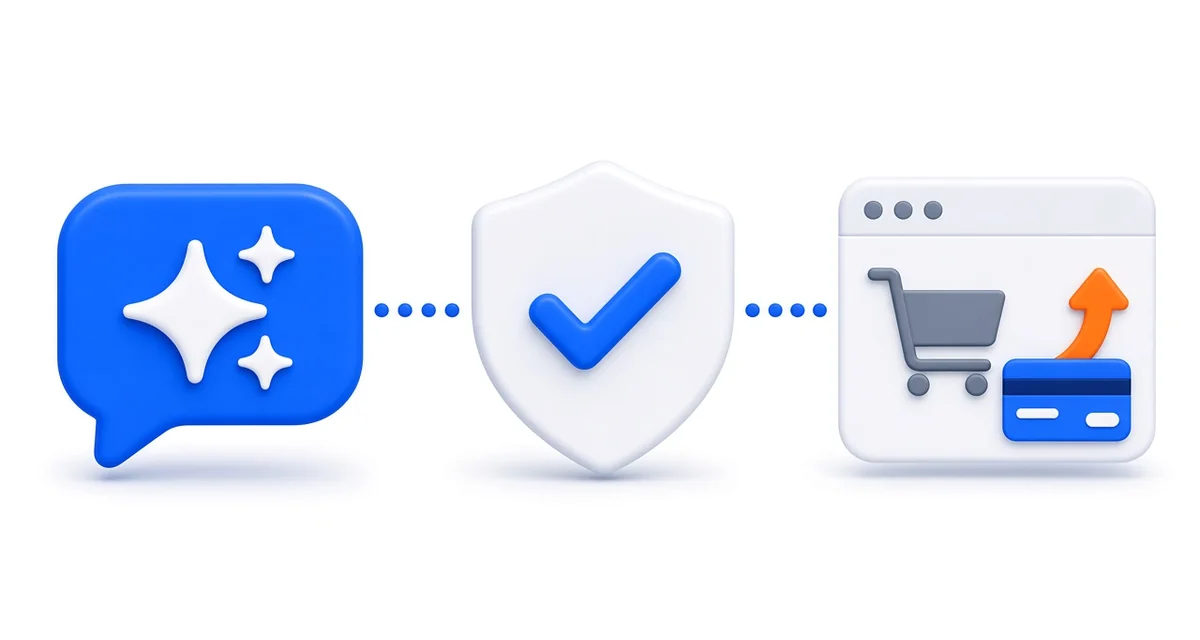
ChatGPT Wallet is a way for an AI agent inside ChatGPT to pay for something on a customer's behalf. OpenAI introduced it on November 13, 2026, built with American Express, Mastercard and Visa. It starts with limited availability: ChatGPT Pro subscribers in the US, aged 18 and older, with eligible US-issued cards, using OpenAI's agent feature called dots.
The customer stays in control. Before each purchase they review the items, the total and the card, then approve it with a security check such as Face ID or a fingerprint. The payment network then issues a payment token, a stand-in for the real card number, so neither the agent nor your business sees the customer's actual card details. OpenAI says customers keep their card's rewards and dispute protections, and that the customer buys directly from you, so you keep the customer relationship, pricing, fulfillment, returns and service.
Why could your website block a sale you want?
Because most sites were built to stop bots, and an agent shopping for a real customer can look like one. OpenAI says some sites may unintentionally block purchases through ChatGPT Wallet or other agentic payment products. It names two separate failure points:
- Your firewall or CDN. ChatGPT sometimes completes tasks with a browser running in the cloud. Security settings that block automated traffic can stop that browser before it reaches your product page or checkout.
- Your payment and fraud tools. Wallet tokens work with existing checkout flows, but OpenAI says risk systems may still flag legitimate agent purchases as suspicious and decline or cancel them.
OpenAI's guidance also notes that sites that block access may lose customers who turn to other sources to decide. You do not need a plugin or a product feed for ChatGPT's cloud browser to use your site; the question is whether your own security lets it in.
How do you let verified ChatGPT agents in without opening the door to every bot?
Allow only verified visits. ChatGPT's cloud browser signs its requests using Web Bot Auth, which is built on the HTTP Message Signatures standard (RFC 9421). Each signed request carries a Signature header, a Signature-Input header and a Signature-Agent header set to "https://chatgpt.com", and OpenAI publishes the public keys needed to check them.
According to OpenAI's agent-access guide, Akamai, Cloudflare, HUMAN and Vercel verify these signatures automatically, and each lists the traffic under its own name. In Cloudflare, for example, it appears as "dots, OpenAI" under Personal Agents in the AI Crawler and Agent access policies. On other CDNs or firewalls, your developer verifies the signature first and only then allows the request.
Two details matter for planning. An exception for verified agent visits can apply site-wide, so keep your existing page-level access controls in place. And it does not change how you treat other bots: these visits are separate from OpenAI's web crawlers, including OAI-SearchBot for search. If you are still deciding which crawlers to allow, read our guide to AI search access versus training permission.
What should a business owner check this month?
OpenAI's announcement lists four areas. Start with the ones that fit how your customers buy:
- Make your information accurate where agents look. Claim your business in ChatGPT and, once verified, keep your details current and add a product feed with pricing and availability if you sell products. See how to claim your business in ChatGPT.
- Test agent access. Ask whoever manages your website, CDN or firewall whether verified ChatGPT agent traffic is currently blocked, challenged or allowed, and change it deliberately rather than by default.
- Talk to your payment and fraud providers. Ask how they recognize legitimate purchases made by agents. OpenAI says it is working with Forter, Riskified, Sardine and Signifyd, and with payment providers including Adyen, Checkout.com and Stripe, on this.
- Consider deeper agent tools later. OpenAI says businesses can build a plugin so agents can check availability or manage carts, and websites can add WebMCP tools. This is optional; browser access works without it.
Does this matter if you are not an online store?
Yes, but differently. OpenAI's agent-access guide says people already ask ChatGPT to visit websites to find a product, compare options or fill out a form. If your business takes quote requests, bookings or inquiries through a web form, the same firewall settings decide whether an agent can complete that step for a prospect. Today, Wallet payments are limited to US Pro subscribers, so most small businesses will not see many agent purchases yet. Checking your settings now is a low-cost way to avoid silently turning away customers as availability expands.
How DigitalOS can help
DigitalOS helps businesses get found, described accurately and chosen in AI search, and that now includes making sure AI agents can actually complete the next step on your site. We can review how ChatGPT and other assistants describe you, which AI crawlers and agents your site allows, and where a quote, booking or checkout might break for an agent. If you want to know where your business stands, start with the DigitalOS AI diagnostic.
Sources and limitations
Reviewed November 16, 2026. ChatGPT Wallet launched with limited US availability, and OpenAI's settings and partner lists may change. Provider menu names are quoted from OpenAI's guide; confirm them in your own dashboard. This is general information, not security, payments or legal advice. External findings are not DigitalOS experiments or guarantees.
- OpenAI — "Introducing ChatGPT Wallet" (November 13, 2026)
How purchases, approvals and payment tokens work; availability; the four recommendations for businesses; fraud and payment partners.
- OpenAI Developers — "Help ensure cloud browser access to your site"
Provider-specific settings for Akamai, Cloudflare, HUMAN and Vercel; site-wide scope; separation from OAI-SearchBot; relationship to feeds and plugins.
- OpenAI Help Center — "ChatGPT Work's Cloud browser allowlisting"
Web Bot Auth headers, public key directory and manual verification steps.
- OpenAI — "Introducing Businesses in ChatGPT" (November 10, 2026)
Business Hub claiming, product feeds and Business Agents.
- OpenAI — OpenAI crawlers documentation
OAI-SearchBot and other crawler controls.
- IETF — RFC 9421, "HTTP Message Signatures"
The signature standard Web Bot Auth builds on.