What did OpenAI launch on November 10, 2026?
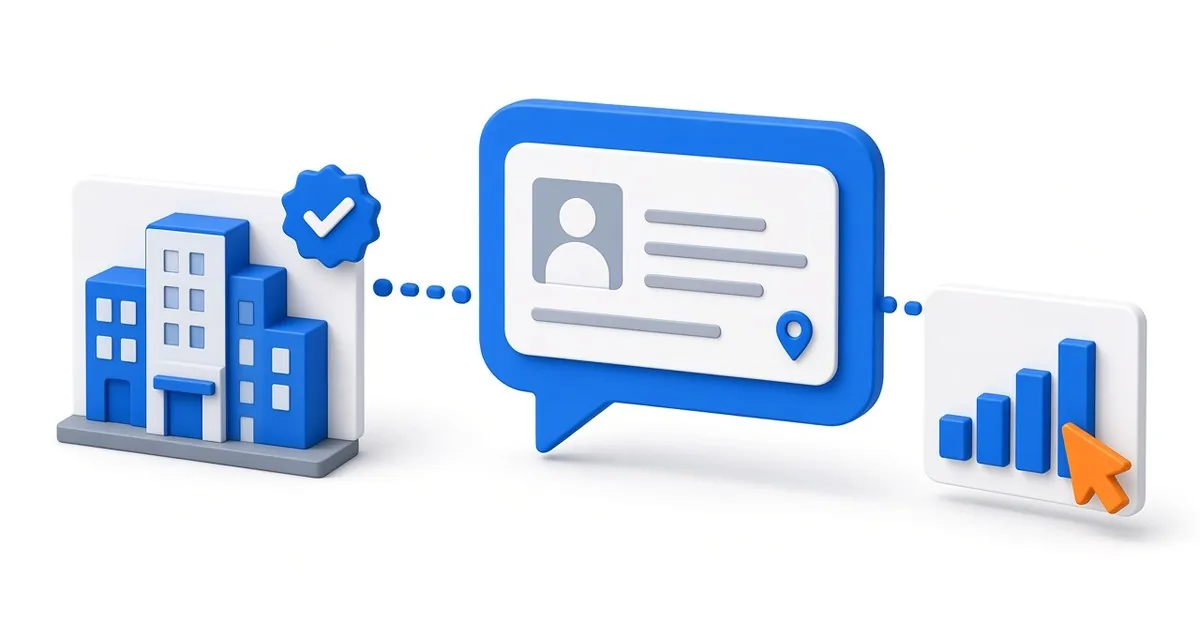
OpenAI introduced Businesses in ChatGPT in beta. Through a tool called Business Hub, a business can claim its profile in ChatGPT, update key details and see aggregated insights about how people engage with it. OpenAI also added Business Agents, a labeled chat that answers questions about a company's own products, starting with eligible ecommerce and online service businesses in the United States.
OpenAI says ChatGPT reaches 1.2 billion people each week. That figure comes from OpenAI's announcement, not an independent audit, but it explains why a managed profile inside ChatGPT matters to any business that customers research before they buy.
Who can claim a business, and how is it verified?
You can claim a business if you own it or are authorized to represent it. You do not need an Ads account or a ChatGPT Enterprise agreement. Verification starts with one of the methods offered for your business, such as a code sent to the business phone or business email, a TXT record added to your website's DNS, or a Shopify store connection.
After the claim is approved, OpenAI requires identity verification through Persona before you can publish changes, view insights or create an agent. The blue verified badge appears only after Persona approval. Make sure the business name, address and any registration or tax number you submit match your official records, because mismatches are a common reason checks fail.
Two limits are worth knowing now. Local stores and restaurants can currently claim only an existing U.S. listing rather than add a new one. Each distinct brand is managed separately, and claiming a main brand does not claim its individual locations.
What do the Business Hub insights measure?
Insights cover the past 28 days and include three things:
- Mentions. For an online business, a mention counts only when ChatGPT references the business's website; naming the brand alone does not count. For a local business, a mention counts when ChatGPT shows a result for that location, even if nobody opens it.
- Website clicks. Clicks on links from supported ChatGPT surfaces. These are not completed visits or purchases.
- Discovery topics. Common themes in answers that mentioned or cited the business. They are aggregate categories, not individual prompts.
Businesses never see individual conversations. A blank metric can mean activity has not reached the reporting threshold, so a blank is not proof of zero.
Will claiming make ChatGPT recommend you more often?
No, according to OpenAI. Claiming lets you manage the information you provide, but it does not guarantee more visibility or give you control over ChatGPT's independent answers. OpenAI also states that advertising does not influence those independent answers. ChatGPT can still draw on other sources, and approved profile changes can take time to appear.
That makes the claimed profile one input among many. The facts on your own website, your reviews and how consistently your business is described across the web still shape what AI assistants say.
What is a Business Agent, and should you build one?
A Business Agent answers customer questions using information you provide, such as product details and return policies, in a chat that is labeled and kept separate from ChatGPT's own answer. At launch it is available to eligible U.S. ecommerce and online service businesses with a website. It cannot complete purchases, take bookings or look up orders; it explains and links back to your site.
A Business Agent can also be the destination for a ChatGPT ad, although OpenAI describes sponsored agents as a limited test with selected advertisers. If you are eligible, preview the agent with the questions customers really ask and fix wrong answers before you publish.
What should a business owner do this week?
- Open Business Hub in ChatGPT and search for your business. If someone else already claimed it, use the dispute option rather than creating a duplicate.
- Decide who holds admin access. The person who claims the business can add teammates and grant an agency access; do not forward a personal claim invitation.
- Check that your website states your services, locations, hours and policies clearly, since online mentions are counted through website references.
- Record a baseline once insights appear, and compare it with your own structured AI visibility testing rather than treating one dashboard as the whole picture.
For related groundwork, see how to keep business information consistent for AI, how to test your AI visibility and what to do if AI gets your business wrong.
How DigitalOS can help
DigitalOS AI Visibility work connects the facts on your website and profiles to the questions customers ask AI assistants, then measures what changes. We can help you claim and verify your profile, tighten the information it relies on and read Business Hub numbers alongside independent testing. If you want to know where your business stands in AI answers today, start with the DigitalOS AI diagnostic.
Sources and limitations
Reviewed November 12, 2026. Businesses in ChatGPT is a beta, and eligibility, features and reporting rules may change. External findings are not DigitalOS experiments or guarantees.
- OpenAI — "Introducing Businesses in ChatGPT" (November 10, 2026)
Official announcement of Business Hub, insights and Business Agents; the weekly-user figure is OpenAI's own.
- OpenAI Help Center — "Setting up your business on ChatGPT"
Eligibility, verification methods, Persona, insight definitions and FAQ; subject to change during the beta.
- Reuters — "OpenAI lets businesses claim ChatGPT profiles, adds AI agents for US e-commerce firms" (November 10, 2026)
Independent news report of the launch.
- VentureBeat — "OpenAI lets you claim your business in ChatGPT and set up a custom agentic AI customer sales rep" (November 10, 2026)
Reporting on rollout terms, including the limited sponsored-agent test.
- Digiday — "OpenAI's new business agents give brands a free way into the conversation it's also selling as an ad" (November 10, 2026)
OpenAI spokesperson clarifications on how mentions and clicks are counted.